Sangeet Ceremony Guide: Performances, Themes, Outfits and Complete Planning Checklist
Publishing Date: 14 Jun, 2025
- What is Sangeet? A pre-wedding celebration of music, dance, and family bonding. The word means "sung together" in Sanskrit.
- When: Typically 1 to 2 days before the wedding, in the evening. Often combined with the mehndi function.
- Duration: 4 to 5 hours from guest arrival through the open dance floor.
- Key Elements: Choreographed family performances, couple's finale dance, DJ or live band, open dance floor, food and drinks.
- Performances: Usually 6 to 10 acts of 3 to 5 minutes each, kept under 90 minutes total.
- Bride's Outfit: Sequin lehengas, Indo-western gowns, or cocktail sarees in vibrant colours.
- Groom's Outfit: Bandhgala, Jodhpuri suit, tuxedo, or coordinated kurta-jacket in bold tones.
- Budget Range: Approximately Rs 20,000 (home) to Rs 15 lakh or more (grand hotel with live entertainment).
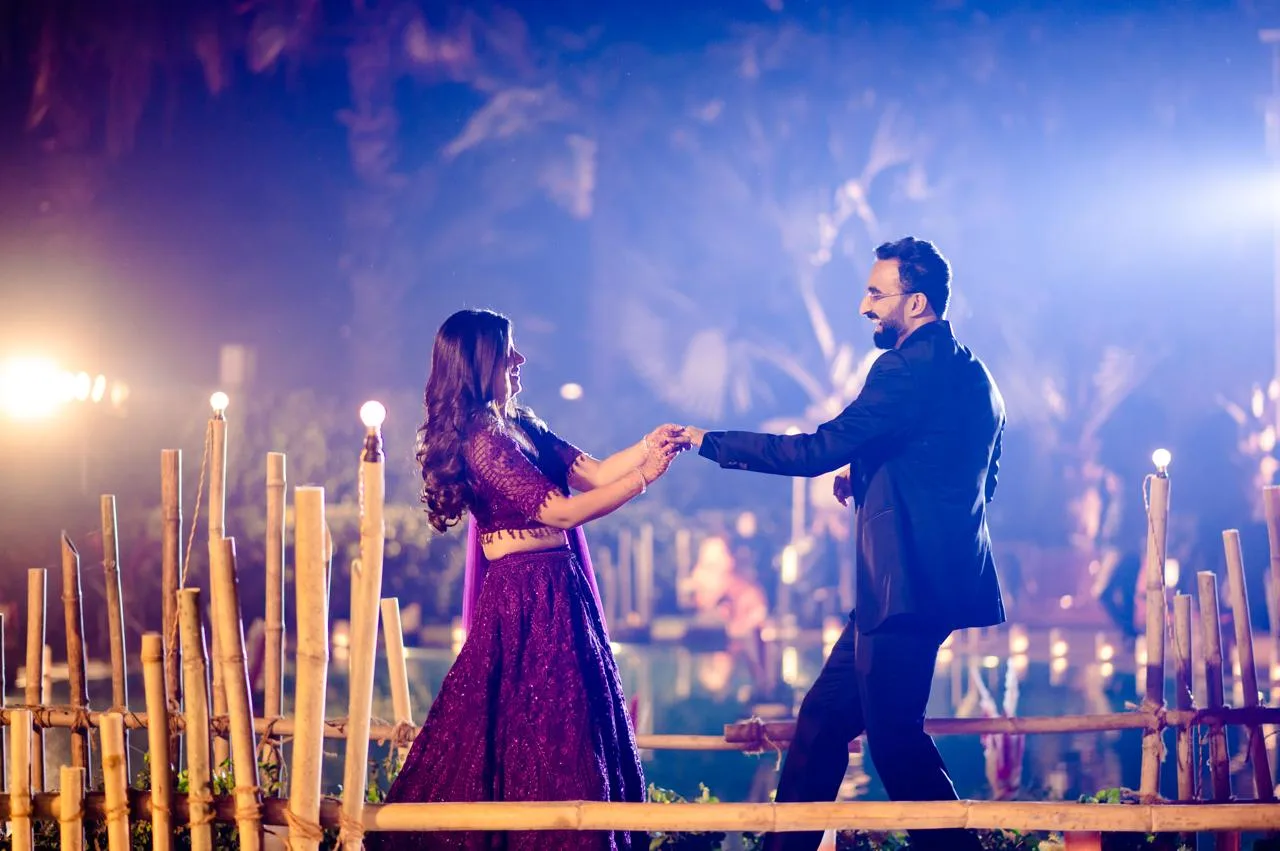
What Is a Sangeet Ceremony?
The sangeet is the most high-energy, entertainment-driven event in an Indian wedding. Unlike the haldi or roka which are ritual-based, the sangeet is purely a celebration. No priests, no mantras. Just music, choreographed performances, family bonding, food, and dancing until the early hours.
Originating in the Punjab region, the sangeet was historically a women-only gathering where the bride's female relatives sang folk songs (suhaag) about marriage, in-laws, and the bride's new life. In older traditions, these gatherings lasted up to 10 days. Over time, the format condensed into a single-evening event, and the guest list expanded to include men, friends, and the groom's side. Today, it functions as the official kick-off party of the wedding, bringing both families together through shared performances.
The Gujarati equivalent is the Garba night, which centres on Garba and Dandiya (circular folk dances with sticks). Many modern weddings blend sangeet and Garba elements, especially in mixed-community celebrations.
Why the Sangeet Matters
Family icebreaker. The sangeet is often the first event where both families interact in a relaxed, informal setting. Choreographing and rehearsing dances together in the weeks before the wedding forces the bride's and groom's relatives to spend time together, breaking barriers and building connections before the wedding day.
Stress relief. After months of planning, outfit shopping, and logistical coordination, the sangeet gives the couple and their families a night to let go and enjoy themselves. It is the one function where nobody is worried about rituals or timings.
Content goldmine. Sangeet performances produce some of the most viral, shareable wedding content. Group dances, surprise acts, and emotional moments are the clips that end up on Instagram reels and YouTube wedding montages. A well-planned sangeet generates memories and media that last far beyond the wedding week.
The Sangeet Event Flow
| Time Block | Activity | Duration |
|---|---|---|
| 7:00 PM | Guest arrival, welcome drinks, starters | 30 to 45 min |
| 7:45 PM | Emcee welcome, couple's entrance | 10 to 15 min |
| 8:00 PM | Choreographed performances (bride's side, groom's side, parents, joint acts) | 60 to 90 min |
| 9:30 PM | Couple's finale performance | 5 to 8 min |
| 9:40 PM | Dinner service | 45 to 60 min |
| 10:30 PM | Open dance floor, DJ or live band takes over | 90 to 120 min |
| 12:00 AM+ | After-party wind-down or close | Open |
Planning the Performances
Performances are the heart of the sangeet. A well-structured performance lineup keeps the energy building throughout the evening. Here is how to plan it:
Performance Lineup
A typical sangeet features 6 to 10 acts. The order matters. Start with a high-energy opening act (bride's friends or groom's friends), alternate between the bride's and groom's sides, build emotional depth with a parents' performance in the middle, and save the couple's dance as the finale. Each act should run 3 to 5 minutes. The total performance segment should stay under 90 minutes.
| Slot | Performer Group | Suggested Style |
|---|---|---|
| 1 | Bride's friends | High-energy Bollywood mashup to open the night |
| 2 | Groom's friends | Upbeat or humorous performance with props or a skit |
| 3 | Bride's siblings and cousins | Emotional or nostalgic medley (childhood to wedding journey) |
| 4 | Groom's siblings and cousins | Fun, playful act (can include teasing the groom) |
| 5 | Bride's parents | Classic or retro number (often the most emotional act of the night) |
| 6 | Groom's parents | Matching or contrasting classic number |
| 7 | Joint family performance | Both sides together on one song (the icebreaker moment) |
| 8 | Couple's finale | Romantic or fun song the couple has rehearsed together |
Hiring a Choreographer
A professional choreographer handles song selection, step design, formation changes, and rehearsal scheduling. They can work with groups of varying skill levels (including reluctant uncles and aunties who haven't danced in years) and create routines that look polished without requiring professional dance training.
Cost range: Approximately Rs 10,000 to Rs 50,000 depending on the number of performances and rehearsal sessions. Some choreographers offer virtual rehearsal packages where they record tutorial videos for each group, reducing in-person sessions. This works well when family members are in different cities.
DIY alternative: Pick songs with simple, recognisable steps (Bollywood classics with iconic hooks). Use YouTube tutorials. Assign one confident dancer in each group as the rehearsal lead. Practice 3 to 4 times in the 2 weeks before the event.
Sangeet vs Mehndi vs Reception
| Aspect | Mehndi | Sangeet | Reception |
|---|---|---|---|
| Focus | Henna application, blessings | Music, dance performances, entertainment | Formal dinner, toasts, couple introduction |
| Timing | Afternoon, 1 to 2 days before wedding | Evening, 1 to 2 days before wedding | Evening, same day or day after wedding |
| Scale | Intimate, 30 to 80 guests | Medium to large, 80 to 300 guests | Largest event, 200 to 800+ guests |
| Bride's role | Seated for henna (4 to 6 hrs) | Active dancer and performer | Meet-and-greet, photos, first dance |
| Formality | Casual and colourful | Semi-formal and vibrant | Formal and glamorous |
| Entertainment | Background music, games | Choreographed performances, DJ | DJ or live band, toasts, photo booth |
Combining the mehndi and sangeet into one evening is common. In that format, the mehndi runs in the afternoon and the sangeet begins after sunset at the same venue.
Popular Sangeet Themes
Bollywood Bling: The most popular choice. Red carpet entrance, movie poster standees, filmi music, disco lights, sequin and metallic decor accents. Works at any venue and appeals to all age groups.
Retro Disco: 70s and 80s inspired. Mirror balls, neon lights, vinyl record props, bell-bottom photo frames, and a playlist heavy on retro Hindi hits. Fun for parents who get to relive their era.
Fairy Light Fantasy: Thousands of warm fairy lights draped across the ceiling and walls, creating an intimate, starlit atmosphere. Pairs well with soft pastels, candle clusters, and floral accents. Ideal for farmhouse venues and outdoor settings.
Punjabi Carnival: Bright colours, dhol players, Bhangra performances, truck-art-style props, phulkari fabrics, and a food spread featuring lassi, chhole bhature, and tandoori starters. High-energy and unapologetically loud.
Royal Razzmatazz: Deep jewel tones (navy, gold, burgundy), velvet draping, ornate frames, chandeliers, and a stage designed like a royal court. Suited for banquet hall and 5-star hotel events.
What to Wear: Outfit Ideas
For the Bride
The sangeet is where the bride can go bold. Unlike the wedding day lehenga (which tends toward red and heavy embroidery) or the reception gown (which leans formal), the sangeet outfit should be vibrant, dance-friendly, and fashion-forward.
Best options: A sequin lehenga (shorter length for better footwork), an Indo-western gown with a thigh-high slit, a dhoti-style ensemble, a cocktail saree, or a jumpsuit with a cape. Fabrics like sequined net, crepe, and metallic organza move well on the dance floor.
Colour palette: Hot pink, emerald green, gold, electric blue, champagne, or multi-colour. Avoid white (too bridal) and red (save for the wedding).
Footwear: Block heels, wedge sandals, or embroidered flats. Stilettos look great but will not survive 3 hours of dancing.
For the Groom
Best options: A bandhgala suit (Jodhpuri) in a rich tone, a Pathani suit with a contrasting jacket, a printed blazer over a plain kurta, or a tuxedo with a twist (velvet lapels, printed lining). Coordinating with the bride's colour scheme without matching exactly creates the best couple photos.
Footwear: Mojaris, loafers, or classic Oxford shoes depending on the formality of the outfit.
Stage and Decor Setup
The sangeet requires a functional performance space, not just decorative elements. Key requirements include:
Stage: A raised platform (at least 12 feet by 16 feet for group performances of 8 to 10 people). Ensure it is sturdy enough for dancing. Carpet or anti-slip matting on the surface prevents falls.
Dance floor: A separate open area in front of the stage for the post-performance party. Ideally 20 feet by 20 feet for 100 to 200 guests.
Sound system: This is non-negotiable. A professional PA system with wireless microphones for the emcee, a mixer for music transitions, and monitor speakers so performers can hear their tracks clearly on stage. Budget approximately Rs 8,000 to Rs 25,000 for professional sound.
Lighting: Moving heads, wash lights, and a follow spot for the stage. Fairy lights and ambient lighting for the seating area. Avoid overly bright white lights during performances since they flatten the energy. Coloured, dynamic lighting transforms the atmosphere.
Food and Beverages
Sangeet food should be casual, flavourful, and easy to eat while standing or between performances. Heavy sit-down meals slow the energy.
Best format: Starters and finger food during the performance segment, followed by a full buffet after the couple's finale. Live counters (chaat, kebab, pasta) keep guests circulating and socialising.
Beverages: Most sangeet events include alcohol service. An open bar with beer, wine, and 3 to 4 signature cocktails is standard. Non-alcoholic options should include themed mocktails, fresh juices, and traditional drinks (thandai, jaljeera, lassi). For families who prefer a dry event, a creative mocktail bar with custom names and garnishes keeps the festive energy without alcohol.
Sangeet Budget Breakdown
| Category | Home/Terrace (50 guests) | Mid-Range Venue (150 guests) | Grand Hotel/Resort (300 guests) |
|---|---|---|---|
| Venue | Free (home) | Approx. Rs 30,000 to Rs 80,000 | Approx. Rs 1 lakh to Rs 4 lakh |
| Decor and stage | Approx. Rs 5,000 to Rs 20,000 | Approx. Rs 30,000 to Rs 80,000 | Approx. Rs 80,000 to Rs 3 lakh |
| DJ or live band | Approx. Rs 5,000 to Rs 15,000 | Approx. Rs 20,000 to Rs 60,000 | Approx. Rs 60,000 to Rs 2 lakh |
| Choreographer | DIY (free) | Approx. Rs 10,000 to Rs 30,000 | Approx. Rs 30,000 to Rs 80,000 |
| Food and beverages | Approx. Rs 10,000 to Rs 25,000 | Approx. Rs 40,000 to Rs 1.2 lakh | Approx. Rs 1.5 lakh to Rs 5 lakh |
| Photography | Smartphone/family | Approx. Rs 15,000 to Rs 40,000 | Approx. Rs 40,000 to Rs 1 lakh |
| Estimated Total | Approx. Rs 20,000 to Rs 60,000 | Approx. Rs 1.5 lakh to Rs 4 lakh | Approx. Rs 4 lakh to Rs 15 lakh+ |
These are approximate estimates. A wedding planner in Delhi or Chandigarh can bundle the sangeet with the overall wedding package for better vendor rates.
Sangeet Planning Checklist
3 to 4 months before: Decide the date and venue. Set the budget. Book the DJ or live band. Decide whether to hire a choreographer. Start forming performance groups and assigning songs.
6 to 8 weeks before: Finalise the performance lineup and sequence. Begin rehearsals (aim for 3 to 4 sessions per group). Book the photographer and videographer. Choose a theme and brief the decorator. Finalise the menu with the caterer.
2 to 3 weeks before: Confirm all vendor bookings. Share the final song list and performance order with the DJ or sound engineer. Finalise outfits for the couple. Run a full dress rehearsal with at least the couple's finale performance. Confirm the emcee and brief them on introductions, timing, and crowd management.
Day before: Walk through the venue. Confirm stage dimensions, sound check, and lighting setup. Share the final timeline with the emcee, DJ, photographer, and coordinator. Charge all devices and back up song files.
Day of: Decor and stage setup 4 to 6 hours before. Sound check and lighting test 2 hours before. Couple arrives 1 hour early for photos. Emcee opens the evening on time. Coordinator manages transitions between performances.
Planning Your Sangeet and Wedding?
Based in Delhi, Wedly Events designs sangeet nights from intimate home functions to grand destination celebrations. Rated 5.0 on WedMeGood and 4.5 on WeddingBazaar.
Get a Free Consultation