Haldi Ceremony Guide: Significance, Rituals, Paste Recipe, Outfits and Decor Ideas
Publishing Date: 14 Jun, 2025
- What is Haldi? A pre-wedding ritual where a turmeric-based paste (ubtan) is applied to the bride and groom's skin for purification, glow, and blessings.
- Significance: Turmeric symbolises purity, protection from negative energy (buri nazar), and a fresh beginning. Yellow represents joy and prosperity.
- When: Morning of the wedding day or 1 to 2 days before, usually after the mehndi function.
- Paste Ingredients: Turmeric powder, sandalwood, rose water, raw milk or curd, and gram flour (besan). Some add mustard oil or saffron.
- Bride's Outfit: Yellow lehenga, saree, or cotton kurta with floral jewelry. Light fabrics that can handle stains.
- Groom's Outfit: Yellow kurta-dhoti, kurta-pajama, or casual kurta with a Nehru jacket.
- Budget Range: Approximately Rs 10,000 (home) to Rs 5 lakh or more (grand venue setup).
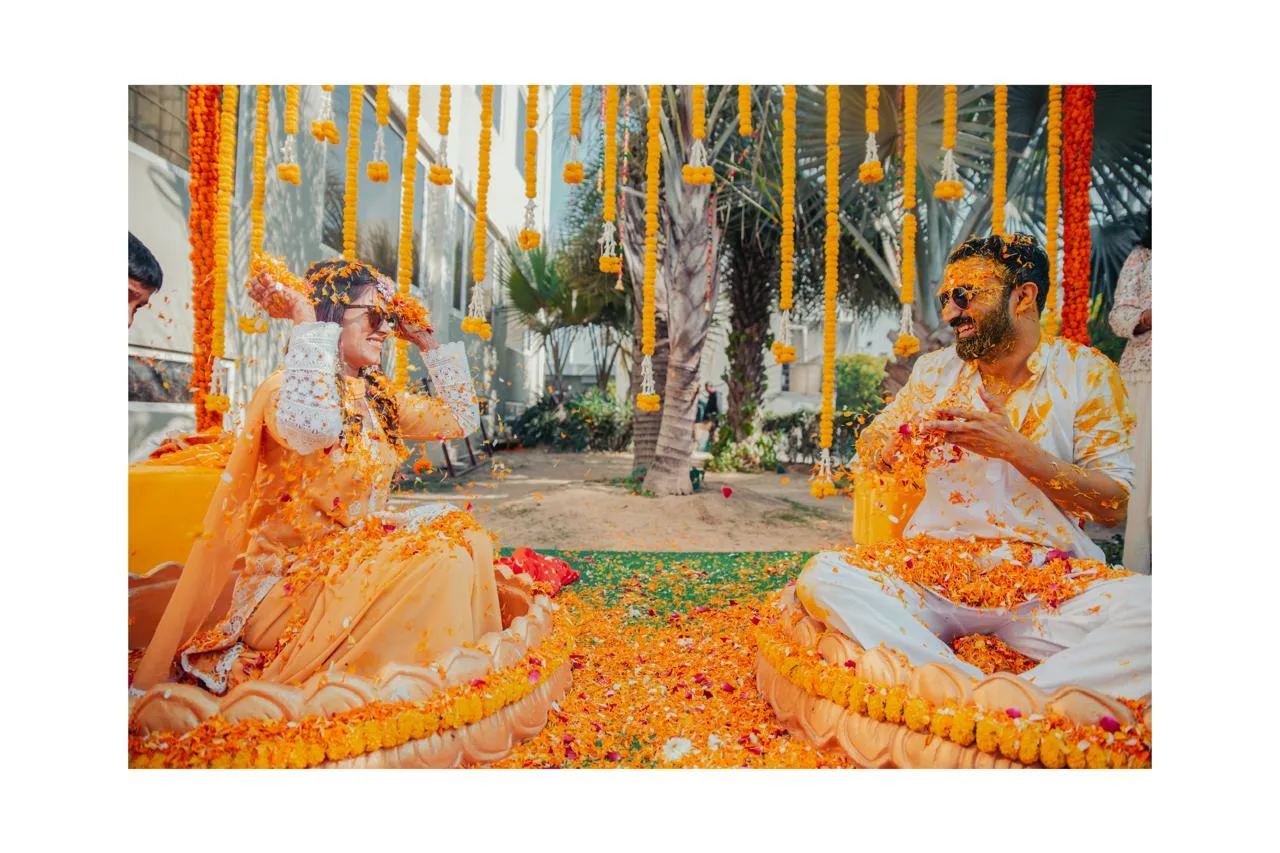
What Is a Haldi Ceremony?
The haldi ceremony is one of the most energetic and colourful pre-wedding rituals in Indian weddings. Turmeric (haldi) is mixed with other natural ingredients to create a golden paste called ubtan, which is then applied to the bride and groom's face, neck, hands, knees, and feet by close family members and friends. The ritual is followed by a ceremonial bath with holy water, symbolising the washing away of impurities before the couple begins their married life.
The ceremony is known by different names across India: Pithi in Gujarat, Vatna in Punjab, Gaye Holud in Bengali tradition, Tel Baan in Jain weddings, Nalangu in Tamil Nadu, and Mangala Snanam in some South Indian communities. While the name and specific customs vary, the core ritual of applying turmeric paste remains consistent: purification, beautification, and blessings before the wedding.
What makes the haldi function special is its energy. Unlike the formal wedding ceremony, the haldi is playful and uninhibited. Family members don't just apply the paste gently; they smear it on each other, splash water, toss flower petals, and turn the entire event into a joyful celebration that produces some of the most candid and memorable photographs of the entire wedding.
Why the Haldi Ceremony Matters: The Three Layers of Significance
1. Natural Beautification
Turmeric has been used in Ayurveda for centuries as a skincare ingredient. Its anti-inflammatory and antibacterial properties help clear blemishes, reduce tan, and leave the skin with a natural radiance. The ubtan paste (turmeric mixed with gram flour, milk, and sandalwood) acts as a gentle exfoliant. When the couple washes it off, their skin has a visibly healthy glow for the wedding day. This is the original, practical reason behind the ritual.
2. Spiritual Protection
In Hindu tradition, yellow is the second most auspicious colour after red. The haldi ceremony is believed to create a protective shield around the bride and groom, warding off buri nazar (evil eye) and negative energies before the wedding. Traditionally, once the haldi is applied, the bride and groom are not supposed to leave the house alone or see each other until they meet at the wedding mandap. This seclusion is meant to preserve the purity and protection the ceremony bestows.
3. Family Bonding and Blessings
The act of applying haldi is deeply personal. Only married women and close relatives are traditionally allowed to apply the paste, and each application carries blessings for the couple's future. Elders bless them with prayers for health, happiness, and prosperity. The ceremony becomes a moment of genuine emotional connection between the couple and their families, often producing tears and laughter in equal measure.
The Haldi Paste: Recipe and Ingredients
The haldi paste is simple to prepare but varies by family tradition and region. Here is the standard recipe used across most North Indian households:
| Ingredient | Quantity | Purpose |
|---|---|---|
| Turmeric powder (haldi) | 4 to 5 tablespoons | Core ingredient, provides colour and antiseptic properties |
| Sandalwood powder (chandan) | 2 tablespoons | Fragrance, cooling effect, and skin brightening |
| Rose water (gulab jal) | 3 to 4 tablespoons | Binds the paste and adds fragrance |
| Raw milk or curd (dahi) | 2 to 3 tablespoons | Moisturising and exfoliating base |
| Gram flour (besan) | 2 tablespoons | Gentle exfoliation and paste consistency |
| Mustard oil (optional) | 1 teaspoon | Traditional in Punjabi haldi (Vatna), adds warmth |
| Saffron strands (optional) | A pinch | Adds fragrance and enhances the golden colour |
Mix all dry ingredients first, then gradually add the liquids until you get a smooth, thick paste. Prepare it fresh on the morning of the ceremony. In some families, the same haldi paste is sent from the groom's home to the bride's home (or vice versa) so that both are anointed with the same turmeric, symbolising their union.
Step-by-Step Haldi Ceremony Rituals
1. Preparation and Setup
The venue is decorated in shades of yellow, orange, and gold. Marigold garlands, banana leaves, brass platters, and yellow fabric draping are the traditional elements. A seating area is prepared for the couple, often a low stool or a decorated platform covered with banana leaves. The haldi paste is prepared fresh and placed in brass or clay bowls alongside mango leaves (used for application in some traditions).
2. The Couple Takes Their Seat
The bride and groom sit on their designated spots, dressed in yellow or white outfits. In traditional ceremonies, they sit separately at their respective homes. In modern combined ceremonies, they sit side by side at the same venue. A piece of yellow cloth is often draped around their shoulders.
3. Haldi Application
Married women from the family begin the application. The paste is applied to five key areas: face and neck, arms, hands, knees, and feet. Some families use mango leaves to apply the paste, while others use their hands directly. The application starts with the elders and moves to younger family members. Each person who applies the haldi offers blessings silently or verbally to the couple.
4. The Playful Phase
Once the formal application is done, the atmosphere shifts. Friends and younger family members start smearing haldi on each other, tossing flower petals, and playing with water. This is where the energy peaks, the dhol beats start, and the most candid photographs happen. Many modern haldi functions include water guns, flower cannons, and colour powder for added fun.
5. Ceremonial Bath
The ceremony concludes with the bride and groom being bathed in holy water (gangajal mixed with regular water) or plain water with flower petals. This bath symbolises the washing away of all impurities and negative energy, leaving the couple purified and ready for the wedding ceremony. In some families, the water is poured by five married women (representing the Panch Kanya) for additional blessings.
What to Wear: Outfit Ideas
For the Bride
Yellow is the default colour for haldi. The outfit should be comfortable, lightweight, and something you won't mind getting stained permanently. The haldi will get everywhere.
Best options: A yellow cotton saree, a simple yellow lehenga, a salwar kameez in bright yellow or orange, or a plain cotton kurta set with a contrast dupatta. Avoid silk, heavy embroidery, or any fabric that cannot handle water and paste. Pre-stitched sarees and draped outfits work well since the bride's hands will be covered in paste.
Jewelry: Floral jewelry (made from real or artificial flowers) is the signature haldi look. Fresh marigold earrings, a flower tiara, or a simple gota-patti set work beautifully. Avoid gold, polki, or kundan since the turmeric can discolour metals and stones.
Footwear: Go barefoot (traditional) or wear simple rubber juttis or flip-flops. Anything you wear on your feet will get stained.
For the Groom
The groom's haldi outfit should be equally informal and stain-friendly.
Best options: A yellow or white kurta-dhoti, kurta-pajama, or a casual cotton kurta with rolled sleeves. Some grooms add a floral safa (turban) or a Nehru jacket for photographs. Bright yellows, mustard, ivory, and even pastel greens work well.
Accessories: A simple flower mala (garland), sunglasses for outdoor ceremonies, and a smile. Keep it minimal since the paste will cover everything.
Haldi Decoration Ideas
Haldi decor should feel bright, festive, and slightly rustic. The dominant palette is yellow, orange, and green, with natural elements like marigolds, banana leaves, and brass accents.
Traditional Home Setup: Marigold garlands on door frames, rangoli at the entrance, brass platters with the haldi paste and mango leaves, banana leaf flooring where the couple sits, and a simple yellow fabric backdrop. Cost range: approximately Rs 3,000 to Rs 15,000.
Garden or Farmhouse Setup: A floral swing (jhoola) for the couple's photographs, marigold curtains, dreamcatcher hangings, low-floor seating with yellow cushions, potted plants, and fairy lights for evening events. Add a chaat or golgappa counter for a festive food corner. A farmhouse venue with existing greenery reduces the decor budget. Cost range: approximately Rs 20,000 to Rs 80,000.
Grand Venue Setup: A themed backdrop with cascading marigold strings, a dedicated splash zone with waterproof flooring, a raised platform for the couple, coordinated yellow and gold table settings, a live dhol player, and a flower petal cannon for the finale. Resort venues with pool areas can incorporate poolside haldi setups. Cost range: approximately Rs 80,000 to Rs 2.5 lakh.
Modern Twists: Neon signs ("Haldi Vibes," "Let's Get Haldi"), a Polaroid station with yellow props, custom haldi hashtag boards, turmeric-themed welcome drinks (haldi doodh shots, mango lassi), and coordinated yellow sunglasses for all guests.
Fun Games and Activities for Haldi
The haldi function naturally generates energy, but structured games keep the momentum going and ensure everyone participates.
Find the Ring: Drop a ring into a large bowl filled with haldi paste (or haldi-coloured water). The bride and groom race to find it. The first to pull out the ring is said to "rule" the household.
Haldi Tug-of-War: The bride's family versus the groom's family. The losing side gets extra haldi smeared on them. Simple, physical, and always produces loud laughter.
Who Gets More Haldi: Guests are divided into two teams. Each team tries to apply the maximum amount of haldi paste on the opposing side's designated person (usually the bride or groom). The more covered, the more blessings.
Water Gun Fight: After the paste application, distribute water guns filled with coloured or plain water. A controlled splash zone keeps the fun contained. Set boundaries so elders and those who prefer to stay dry can observe from a safe distance.
Musical Chairs (Haldi Edition): Standard musical chairs, but the person eliminated has to get haldi applied on their face before sitting out. Keeps the energy high and the crowd involved.
Regional Variations of the Haldi Ceremony
| Region | Local Name | Key Differences |
|---|---|---|
| Punjab | Vatna | Paste includes mustard oil. Applied with grass sticks. High-energy dhol and Bhangra dancing throughout. |
| Gujarat | Pithi | Turmeric mixed with oil and sandalwood. Both families participate together. Often combined with Garba dancing. |
| Bengal | Gaye Holud | Literally "yellow on the body." Fish, sweets, and gifts accompany the turmeric. Celebrated with traditional Baul music. |
| Maharashtra | Halad Chadavne | Turmeric is rubbed on by five married women (suvasini). Followed by a sandalwood and kumkum tilak. |
| Tamil Nadu | Nalangu | Includes a playful game where bride and groom try to grab a ball soaked in oil. Turmeric applied after an oil massage. |
| Rajasthan | Pithi/Ubtan | Grand and colourful. Uses brass thalis for paste. Often held in decorated courtyards with traditional Rajasthani music. |
| Jain | Tel Baan | Oil and turmeric applied. The ceremony includes specific prayers and mantras. More structured and ritualistic. |
How to Remove Haldi Stains
From skin: Apply a paste of lemon juice and baking soda, leave for 5 minutes, then rinse. Coconut oil also lifts turmeric stains effectively. The yellow tint fades naturally within 24 to 48 hours. Avoid harsh scrubbing, especially on the bride and groom's face the day before the wedding.
From white clothes: Soak in warm water with white vinegar (1:4 ratio) for 30 minutes, then wash normally. For stubborn stains, apply a paste of baking soda and water directly on the stain before washing.
From coloured clothes: Apply liquid dish soap directly on the stain, let it sit for 15 minutes, then rinse with cold water. Avoid hot water on turmeric stains since heat sets the colour permanently.
From floors and surfaces: A mixture of bleach and water works on tiles and marble. For wooden surfaces, use a paste of baking soda and water. Cover high-risk areas with tarpaulin or plastic sheeting before the ceremony.
Haldi Ceremony Budget Breakdown
| Category | Simple (Home) | Mid-Range (Venue) | Grand (Resort/Farmhouse) |
|---|---|---|---|
| Venue | Free (home/terrace) | Approx. Rs 15,000 to Rs 50,000 | Approx. Rs 50,000 to Rs 1.5 lakh |
| Decor | Approx. Rs 3,000 to Rs 15,000 | Approx. Rs 20,000 to Rs 60,000 | Approx. Rs 60,000 to Rs 2 lakh |
| Haldi paste and supplies | Approx. Rs 500 to Rs 2,000 | Approx. Rs 1,000 to Rs 3,000 | Approx. Rs 2,000 to Rs 5,000 |
| Food and beverages | Approx. Rs 5,000 to Rs 15,000 | Approx. Rs 20,000 to Rs 60,000 | Approx. Rs 50,000 to Rs 1.5 lakh |
| Music (dhol/DJ) | Approx. Rs 2,000 to Rs 5,000 | Approx. Rs 8,000 to Rs 20,000 | Approx. Rs 15,000 to Rs 50,000 |
| Photography | Smartphone/family photos | Approx. Rs 10,000 to Rs 25,000 | Approx. Rs 25,000 to Rs 60,000 |
| Estimated Total | Approx. Rs 10,000 to Rs 40,000 | Approx. Rs 75,000 to Rs 2 lakh | Approx. Rs 2 lakh to Rs 5 lakh+ |
These are approximate estimates. A wedding planner in Jaipur or Udaipur can coordinate the haldi alongside the broader wedding package for better vendor rates.
Haldi Planning Checklist
4 to 6 weeks before: Decide on the date and timing (morning of wedding day or day before). Choose the venue: home, terrace, garden, or hired space. Set the budget. Decide if it will be a separate ceremony or combined with the mehndi function.
2 to 3 weeks before: Book the photographer and dhol player or DJ. Finalise the decor theme and colour palette. Plan the menu (keep it informal: chaat, snacks, cold drinks, lemonade). Order yellow and white outfits for the bride, groom, and close family.
1 week before: Buy ingredients for the haldi paste. Arrange waterproof sheets, tarpaulin, and plastic covers for furniture. Order marigold garlands, flowers, and brass platters. Prepare games and activity supplies (ring, water guns, etc.). Communicate the dress code to guests.
Day before: Set up decor and the seating area. Cover floors and surfaces with protective sheeting. Prepare the haldi paste fresh on the morning of the ceremony. Lay out towels, water, and clean clothes for post-ceremony wash-up.
Day of: Start the ceremony in the morning (between 8 AM and 11 AM is ideal). Complete the formal application in 30 to 45 minutes. Allow the playful phase to run for another 30 to 60 minutes. Conclude with the ceremonial bath. Serve food and drinks after clean-up. Transition to the next function (sangeet or wedding prep) by afternoon.
Planning Your Haldi and Wedding?
Based in Delhi, Wedly Events designs haldi setups from intimate home functions to grand destination celebrations. Rated 5.0 on WedMeGood and 4.5 on WeddingBazaar.
Get a Free Consultation