Mehndi Ceremony Guide: Significance, Rituals, Designs, Outfits and Complete Planning Tips
Publishing Date: 14 Jun, 2025
- What is Mehndi? A pre-wedding ritual where henna paste is applied in intricate patterns on the bride's hands and feet, symbolising love, prosperity, and new beginnings.
- When: Held 1 to 2 days before the wedding, usually in the afternoon or evening.
- Duration: Full bridal mehndi takes 4 to 6 hours. The paste stays on for 6 to 8 hours for optimal colour.
- The Belief: Darker mehndi colour is said to represent deeper love between the couple.
- Where: Gardens, terraces, farmhouses, or indoor setups with colourful decor and fairy lights.
- Bride's Outfit: Bright lehengas in yellow, green, or orange with floral or gota-patti jewelry.
- Groom's Outfit: Printed kurtas with Nehru jackets in vibrant or pastel tones.
- Artist Cost: Approximately Rs 5,000 to Rs 25,000 for bridal mehndi, depending on complexity.
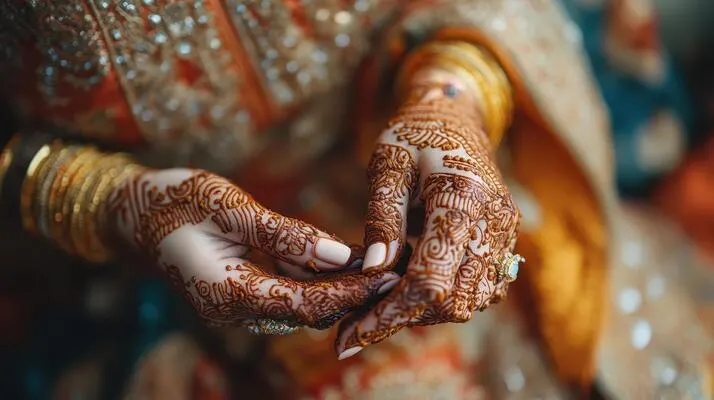
What Is a Mehndi Ceremony?
The mehndi ceremony is one of the most vibrant and artistic pre-wedding rituals in Indian culture. Mehndi, also known as henna, is a paste made from the dried leaves of the Lawsonia inermis plant. When applied to the skin, it creates temporary reddish-brown patterns that last 1 to 3 weeks. The ceremony centres on adorning the bride's hands and feet with intricate designs, surrounded by music, dancing, food, and family warmth.
While the tradition is most prominent in Hindu and Muslim weddings across North India, Rajasthan, Gujarat, Punjab, and Uttar Pradesh, its appeal has spread across the country and beyond. The mehndi function has evolved from a quiet, women-only gathering into a full-scale celebration that many families treat as one of the highlight events of the entire wedding.
History and Cultural Significance
Henna use dates back over 5,000 years, with evidence of its practice in ancient Egypt, the Middle East, and the Indian subcontinent. In India, the tradition became deeply embedded in wedding culture during the Mughal era, when elaborate henna designs gained prominence in royal courts. Historical records from Emperor Jahangir's court reference formal henna ceremonies held for princely weddings.
Beyond aesthetics, mehndi carries layers of cultural meaning:
Medicinal roots. Henna has natural cooling and anti-inflammatory properties. In Ayurveda, it is believed to calm the nervous system and relieve stress. Applying it before the wedding helps the bride relax during what is often a physically and emotionally intense period.
Symbol of love. A widely held folk belief states that the darker the bride's mehndi colour, the deeper her partner's love and the stronger their bond. While not scientifically grounded, this tradition adds playful anticipation to the waiting period after application.
Rite of passage. Like the mangalsutra or sindoor, mehndi marks the bride's transition into married life. The act of sitting still for hours while the design is applied becomes a meditative moment before the wedding day's intensity.
Hidden name tradition. In many families, the mehndi artist hides the groom's name or initials within the bride's design. On the wedding night, the groom must find it, turning it into a lighthearted bonding game between the couple.
How the Mehndi Ceremony Unfolds
The structure of a mehndi function varies by family and region, but the typical flow follows this pattern:
1. Setup and Welcome
The venue is decorated with bright colours, flowers, fairy lights, and themed elements. Guests arrive and are welcomed with drinks, chaat, or light snacks. A designated mehndi area is set up for the bride, usually a decorated seat or swing (jhoola) that serves as the visual centrepiece.
2. Bridal Mehndi Application
The bride's mehndi is the main event. A professional artist begins applying intricate designs on both hands (typically up to the elbows) and both feet (up to the ankles). This process takes 4 to 6 hours for full bridal coverage. During this time, the bride is essentially seated in one place, so entertainment, music, and guest interaction revolve around her.
3. Guest Mehndi
Additional mehndi artists apply simpler designs on the hands of female guests and bridesmaids. Some modern celebrations also offer mehndi for male guests who want a small design or the couple's wedding date on their palms. Guest mehndi typically takes 10 to 30 minutes per person.
4. Music, Dancing, and Games
The celebration comes alive with music. Traditional options include dhol beats and folk songs, while modern setups feature Bollywood playlists or a live band. Choreographed dances by family and friends are common, blurring the line between mehndi and sangeet ceremony. Popular activities include "Who Knows the Bride Best?" quizzes, Polaroid photo stations, and henna design contests among guests.
5. Food and Celebration
Mehndi food is typically informal and vibrant: chaat counters, golgappa stations, kebab platters, mocktail bars, and a dessert spread. The tone is festive and relaxed compared to the formality of the wedding day. Many families end the mehndi with a group dance or a special performance dedicated to the bride.
Mehndi Design Styles
The design style sets the visual tone for the bride's mehndi. Four main styles dominate, and many brides today opt for a fusion approach.
| Style | Characteristics | Best For |
|---|---|---|
| Traditional Indian | Dense, intricate patterns covering the entire hand. Paisleys, peacocks, mandalas, and fine line work. Heavy fill with minimal negative space. | Brides who want the classic, full-coverage bridal look. |
| Arabic | Bold, sweeping floral patterns with open spaces. Large flowers and vines with thick outlines. Fewer details, stronger visual impact. | Brides who prefer a modern, less dense look with faster application time. |
| Indo-Arabic Fusion | Combines Indian intricacy with Arabic boldness. Mix of fine details and open spaces. Often includes personalised elements. | Brides who want the best of both styles. |
| Minimalist | Simple, elegant patterns. Finger tips, single motifs, or geometric shapes. Light coverage with maximum negative space. | Brides who prefer understated elegance or have a shorter application window. |
Popular Motifs and Their Meanings
Paisleys: Fertility, abundance, and good fortune. One of the most universal mehndi motifs across all styles.
Peacocks: Beauty, elegance, and divine grace. Especially popular in Rajasthani bridal mehndi.
Lotus: Purity, spiritual awakening, and new beginnings. Significant in Hindu iconography.
Vines and leaves: Growth, vitality, and the enduring journey of partnership.
Mandalas: Unity, eternity, and the cyclical nature of life. Often placed at the centre of the palm.
Elephants: Royalty, wisdom, and the blessings of Lord Ganesha (the remover of obstacles).
Fish: Fertility, creativity, and transformation. Especially prominent in Bengali wedding traditions.
Modern brides increasingly personalise their mehndi with the couple's initials, their wedding date, a miniature portrait, or symbols from their love story (a reference to how they met, their favourite place, or a shared hobby).
What to Wear: Outfit Ideas
For the Bride
Mehndi is the one function where brightness is not just accepted but expected. Unlike the wedding day (where red dominates) or the engagement (where pastels are popular), the mehndi outfit should pop with colour and energy.
Best options: Lightweight lehenga, sharara set, flared Anarkali, or a pre-stitched saree in yellow, green, orange, fuchsia, or multi-colour. Avoid heavy fabrics and tight sleeves since the bride's hands and arms will be wet with henna paste for hours.
Jewelry: Floral jewelry (real or artificial flowers strung on wire) is the signature mehndi look. Gota-patti jewelry, junk jewelry, or shell accessories also work. Save the real gold and diamonds for the wedding day.
Footwear: Flat juttis, kolhapuri chappals, or embroidered slides. Heels are impractical for a function that involves sitting for hours and then dancing.
For the Groom
The groom's mehndi outfit should be vibrant but comfortable. This is the function where playful fashion works.
Best options: Printed kurta with a Nehru jacket, a colourful bandhgala, or a casual kurta-pajama set. Bold prints, florals, and contrast colours (mustard, teal, coral) complement the mehndi setting. Matching with the bride's colour palette creates a cohesive look in photographs.
Footwear: Mojaris, kolhapuri sandals, or embroidered loafers.
Popular Mehndi Ceremony Themes
A well-chosen theme ties together the decor, colour palette, outfits, food presentation, and music into a cohesive experience. Here are the most requested themes for mehndi functions:
Rajasthani Carnival: Bright mirrors, bandhani fabrics, puppet strings, folk musicians, camel motifs, and a vibrant colour palette of red, yellow, and orange. Pair with a Jaipur wedding planner for authentic Rajasthani elements.
Bohemian Chic: Dreamcatchers, macrame hangings, earth tones mixed with pops of colour, low floor seating with cushions, and potted plants. A relaxed, free-spirited vibe that works beautifully at farmhouse venues.
Pastel Garden: Soft florals, fairy lights, mint and lavender tones, floral arches, and light fabric draping. Ideal for afternoon mehndi events in garden settings.
Tropical Paradise: Palms, pineapples, bright greens and corals, tiki-style food stations, and fruity mocktails. Works well for Goa and beach-side mehndi setups.
Mughal Elegance: Arched backdrops, gold accents, chandelier-style lighting, rich fabrics, and a regal food spread. A more formal mehndi theme suited to banquet hall and hotel settings.
How to Get a Darker Mehndi Colour
The colour of your mehndi depends on henna quality, body chemistry, and aftercare. Here are the proven steps for achieving the deepest colour:
Use fresh, natural henna. Organic, chemical-free henna paste produces the best results. Avoid pre-mixed cones with added chemicals, as they can cause allergic reactions and give uneven colour.
Apply a lemon-sugar sealant. Mix lemon juice with sugar and dab it lightly over the dried paste using a cotton ball. This prevents the paste from cracking and flaking off prematurely. Reapply at 1-hour intervals.
Keep the paste on for 6 to 8 hours. Ideally overnight. The longer the paste stays on the skin, the deeper the dye penetrates. Wrap hands loosely in tissue or plastic wrap to retain body heat and moisture.
Scrape, don't wash. When removing the dried paste, rub your hands together or use a blunt edge to scrape it off. Never wash it off with water immediately. Avoid water contact on the hennaed areas for 12 to 24 hours after removal.
Apply natural oil. After scraping, rub a thin layer of eucalyptus oil, mustard oil, or Vicks VapoRub over the design. The warmth and chemicals in these products help darken the stain.
Avoid cold. Mehndi darkens with warmth. In winter weddings, keep your hands warm. Clove smoke (holding hands over gently heated cloves) is a traditional trick used by mehndi artists to intensify the colour.
Mehndi Artist: How to Choose and What to Expect
Start early. Book your mehndi artist 2 to 3 months before the wedding. Top artists in cities like Delhi and Noida get booked months ahead during peak wedding season.
Review their portfolio. Check their Instagram or portfolio for consistency in style, cleanliness of lines, and variety of designs. Ask for references from recent brides.
Discuss your design in advance. Share reference images of patterns you like, discuss whether you want the groom's name hidden, and confirm the coverage area (full arms, half arms, feet, etc.).
Confirm the team size. For a mehndi function with 50 or more guests, one artist is not enough. Ask how many artists the team includes and how they handle guest mehndi alongside the bridal application.
| Service | Approximate Cost Range |
|---|---|
| Bridal mehndi (full hands and feet, intricate) | Rs 5,000 to Rs 25,000 |
| Premium/celebrity mehndi artist | Rs 30,000 to Rs 1 lakh+ |
| Guest mehndi (simple designs, per person) | Rs 100 to Rs 500 |
| Travel charges (for destination weddings) | Rs 2,000 to Rs 10,000 extra |
Mehndi vs Sangeet: What Is the Difference?
| Aspect | Mehndi Ceremony | Sangeet Ceremony |
|---|---|---|
| Focus | Henna application, blessings, intimate celebration | Music, dance performances, entertainment |
| Scale | Smaller, close family and friends (30 to 80 people) | Larger, extended family and friends (100+ people) |
| Timing | Afternoon or early evening, 1 to 2 days before wedding | Evening or night, often the night before wedding |
| Bride's role | Seated for henna application (4 to 6 hours) | Active participant in dances and performances |
| Entertainment | Background music, games, casual dancing | Choreographed performances, DJ, live band |
| Venue | Home, terrace, garden, small venue | Banquet hall, hotel, large outdoor space |
Many families combine both events into a single evening. In that case, the mehndi starts in the afternoon, and the sangeet performances begin after sunset once the bride's henna has had time to set.
Mehndi Ceremony Budget Breakdown
| Category | Simple (Home) | Mid-Range (Venue) | Grand (Hotel/Resort) |
|---|---|---|---|
| Venue | Free (home/terrace) | Approx. Rs 20,000 to Rs 60,000 | Approx. Rs 60,000 to Rs 2 lakh |
| Decor | Approx. Rs 5,000 to Rs 15,000 | Approx. Rs 20,000 to Rs 60,000 | Approx. Rs 60,000 to Rs 2 lakh |
| Mehndi artists (bridal + guests) | Approx. Rs 5,000 to Rs 15,000 | Approx. Rs 15,000 to Rs 40,000 | Approx. Rs 30,000 to Rs 1 lakh |
| Food and beverages | Approx. Rs 10,000 to Rs 25,000 | Approx. Rs 30,000 to Rs 80,000 | Approx. Rs 80,000 to Rs 2.5 lakh |
| Music/DJ | Bluetooth speaker (free) | Approx. Rs 10,000 to Rs 25,000 | Approx. Rs 25,000 to Rs 75,000 |
| Photography | Smartphone/family photos | Approx. Rs 10,000 to Rs 30,000 | Approx. Rs 30,000 to Rs 75,000 |
| Estimated Total | Approx. Rs 20,000 to Rs 55,000 | Approx. Rs 1 lakh to Rs 3 lakh | Approx. Rs 3 lakh to Rs 8 lakh+ |
These are approximate estimates. Actual costs vary by city, guest count, and vendor choices. A wedding planner in Udaipur or Chandigarh can help coordinate the mehndi as part of your overall wedding package.
Mehndi Planning Checklist
6 to 8 weeks before: Decide on the date, time, and venue. Set the budget. Choose a theme and colour palette. Book the mehndi artist after reviewing portfolios.
3 to 4 weeks before: Finalise the guest list. Book photographer and DJ or musician. Order decor elements: flowers, fairy lights, props, backdrop. Plan the menu with the caterer.
1 to 2 weeks before: Confirm all vendor bookings. Finalise the bride and groom's outfits. Share reference images with the mehndi artist. Create a playlist or share song preferences with the DJ. Plan games and activities for guests.
Day before: Set up decor and photo areas. Arrange the bridal seating area (jhoola/decorated chair). Prepare the lemon-sugar sealant for post-application. Lay out emergency supplies: tissues, cotton, safety pins, compact.
Day of: Start bridal mehndi 4 to 6 hours before the main celebration begins. Have guest artists begin 1 hour before guest arrival. Keep snacks and drinks flowing during the application period. Transition to music and dancing once the bride's mehndi is set.
Planning Your Mehndi and Wedding?
Based in Delhi, Wedly Events designs mehndi setups from intimate home functions to grand destination celebrations. Rated 5.0 on WedMeGood and 4.5 on WeddingBazaar.
Get a Free Consultation